|
Showing posts with label immigration. Show all posts
Showing posts with label immigration. Show all posts
Wednesday, November 30, 2016
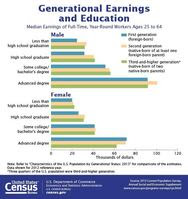
Children of Foreign-Born Parents More Likely to Be College-Educated Than Their Parents

Wednesday, July 8, 2015
The Newest New Yorkers
The Newest New Yorkers report demonstrates that New York’s immigrants have played an integral role in maintaining the City’s record population growth and significantly boosting the City’s economic vitality. The City’s immigrant population has reached a new peak at more than 3 million; a number which would form the third largest city in the United States, bested only by New York City and Los Angeles.
The strength of immigrants is most evident in Queens, where the largest percentage of the newest New Yorkers has settled; nearly one-half of the borough’s residents are foreign-born. The largest numeric growth in immigration took place in the Bronx, while Staten Island saw the largest percentage increase.
The report is the product of expert demographic analysis of data from the US Census Bureau’s American Community Survey, as well as other federal and city administrative data. Complementing its new report, City Planning also launched an easy-to-use, interactive online map showing the largest immigrant groups in each of the City’s neighborhoods as well as where the City’s top ten largest immigrant populations live.
The strength of immigrants is most evident in Queens, where the largest percentage of the newest New Yorkers has settled; nearly one-half of the borough’s residents are foreign-born. The largest numeric growth in immigration took place in the Bronx, while Staten Island saw the largest percentage increase.
The report is the product of expert demographic analysis of data from the US Census Bureau’s American Community Survey, as well as other federal and city administrative data. Complementing its new report, City Planning also launched an easy-to-use, interactive online map showing the largest immigrant groups in each of the City’s neighborhoods as well as where the City’s top ten largest immigrant populations live.
Thursday, January 2, 2014
International Migrants by Country
According to the United Nations Population Division, an international migrant is someone who has been living for one year or longer in a country other than the one in which the person was born. International migrants include many foreign workers, international students, refugees and their descendants. For a complete analysis, read the full report.
More from the Pew Research Center.
More from the Pew Research Center.
Thursday, September 12, 2013
World Statistics Pocketbook, 2013 edition
The World Statistics Pocketbook, 2013 edition is an annual compilation of key statistical indicators prepared by the United Nations Statistics Division of the Department of Economic and Social Affairs. Over 50 indicators have been collected from more than 20 international statistical sources and are presented in one-page profiles for 216 countries or areas of the world. This issue covers various years from 2005 to 2012. For the economic indicators, in general, three years - 2005, 2010 and 2011 - are shown; for the indicators in the social and environmental categories, data for one year are presented.
The topics covered include: agriculture, balance of payments, education, energy, environment, food, gender, health, industrial production, information and communication, international finance, international tourism, international trade, labour, migration, national accounts, population and prices. The technical notes contain brief descriptions of the concepts and methodologies used in the compilation of the indicators as well as information on the statistical sources for the indicators. Reference to primary sources of the data is provided for readers interested in longer time-series data or more detailed descriptions of the concepts or methodologies.
http://unstats.un.org/unsd/pocketbook/World_Statistics_Pocketbook_2013_edition.pdf Direct link to United Nations Statistics Division PDF document
The topics covered include: agriculture, balance of payments, education, energy, environment, food, gender, health, industrial production, information and communication, international finance, international tourism, international trade, labour, migration, national accounts, population and prices. The technical notes contain brief descriptions of the concepts and methodologies used in the compilation of the indicators as well as information on the statistical sources for the indicators. Reference to primary sources of the data is provided for readers interested in longer time-series data or more detailed descriptions of the concepts or methodologies.
http://unstats.un.org/unsd/pocketbook/World_Statistics_Pocketbook_2013_edition.pdf Direct link to United Nations Statistics Division PDF document
Sunday, February 17, 2013
Undocumented Immigrants by California county
Here is a study of undocumented immigrant data estimates for California counties, or cluster of counties.
Wednesday, April 25, 2012
U.S. Naturalizations: 2011
Naturalization is the process by which U.S. citizenship is conferred upon foreign citizens or nationals after fulfilling the requirements established by Congress in the Immigration and Nationality Act (INA). After naturalization, foreign-born citizens enjoy nearly all the same benefits, rights and responsibilities that the Constitution gives to native-born U.S. citizens, including the right to vote. This Office of Immigration Statistics Annual Flow Report (PDF) presents information on the number and characteristics of foreign nationals aged 18 years and over who were naturalized during 2011.
Data were obtained from administrative records of U.S. Citizenship and Immigration Services (USCIS) of the Department of Homeland Security. These records consist of information from applications for naturalization.
In 2011, the total number of persons naturalizing was 694,193. The leading countries of birth of new citizens were Mexico (94,783), India (45,985), the Philippines (42,520), the People’s Republic of China (32,864), and Colombia (22,693). The largest number of persons naturalizing lived in California (151,183), Florida (87,309), and New York (76,603).
***
Unauthorized Immigrants: 11.5 Million
The number of unauthorized immigrants in the United States changed little between 2010 and 2011, according to new estimates by the Department of Homeland Security. As of January 2011, an estimated 11.5 million unauthorized immigrants were in the country, about the same as the 11.6 million in January 2010 (this figure has been revised upward from 10.8 million based on 2010 census weights). The number of unauthorized immigrants grew 36 percent between 2000 and 2011, from 8,460,000 to 11,510,000.
But the Net Migration from Mexico Falls to Zero—and Perhaps Less (PDF)
The largest wave of immigration in history from a single country to the United States has come to a standstill. After four decades that brought 12 million current immigrants—more than half of whom came illegally—the net migration flow from Mexico to the United States has stopped—and may have reversed, according to a new analysis by the Pew Hispanic Center of multiple government data sets from both countries.
The standstill appears to be the result of many factors, including the weakened U.S. job and housing construction markets, heightened border enforcement, a rise in deportations, the growing dangers associated with illegal border crossings, the long-term decline in Mexico’s birth rates and changing economic conditions in Mexico.
Data were obtained from administrative records of U.S. Citizenship and Immigration Services (USCIS) of the Department of Homeland Security. These records consist of information from applications for naturalization.
In 2011, the total number of persons naturalizing was 694,193. The leading countries of birth of new citizens were Mexico (94,783), India (45,985), the Philippines (42,520), the People’s Republic of China (32,864), and Colombia (22,693). The largest number of persons naturalizing lived in California (151,183), Florida (87,309), and New York (76,603).
***
Unauthorized Immigrants: 11.5 Million
The number of unauthorized immigrants in the United States changed little between 2010 and 2011, according to new estimates by the Department of Homeland Security. As of January 2011, an estimated 11.5 million unauthorized immigrants were in the country, about the same as the 11.6 million in January 2010 (this figure has been revised upward from 10.8 million based on 2010 census weights). The number of unauthorized immigrants grew 36 percent between 2000 and 2011, from 8,460,000 to 11,510,000.
But the Net Migration from Mexico Falls to Zero—and Perhaps Less (PDF)
The largest wave of immigration in history from a single country to the United States has come to a standstill. After four decades that brought 12 million current immigrants—more than half of whom came illegally—the net migration flow from Mexico to the United States has stopped—and may have reversed, according to a new analysis by the Pew Hispanic Center of multiple government data sets from both countries.
The standstill appears to be the result of many factors, including the weakened U.S. job and housing construction markets, heightened border enforcement, a rise in deportations, the growing dangers associated with illegal border crossings, the long-term decline in Mexico’s birth rates and changing economic conditions in Mexico.
Tuesday, December 13, 2011
Unauthorized Immigrants: Length of Residency, Patterns of Parenthood
Nearly two-thirds of the 10.2 million unauthorized adult immigrants in the United States have lived in this country for at least 10 years and nearly half are parents of minor children, according to new estimates by the Pew Hispanic Center, a project of the Pew Research Center.
These estimates are based on data from the U.S. Census Bureau’s March 2010 Current Population Survey, augmented with the Center’s analysis of the demographic characteristics of the unauthorized immigrant population using a "residual estimation methodology" that the Center has employed for many years.
Full Report PDF
Monday, November 14, 2011
Profiles on Legal Permanent Residents
From the Department of Homeland Security
Legal permanent residents (LPRs) are foreign nationals who have been granted the right to reside permanently in the United States. LPRs are often referred to simply as "immigrants," but they are also known as "permanent resident aliens" and "green card holders."
Profiles of selected demographic characteristics of immigrants who became legal permanent residents during the fiscal year are available by country of birth, state of residence, and metropolitan area of residence.
In FY 2010, of the 1,042,625 persons obtaining legal permanent resident status, 471,849 were men, and 570,771 were women. 476,049 were new arrivals, which means they went to their consulates out of country (214,214 men; 261,833 women). 566,576
were "adjustments of status", meaning they were in the US under a student visa, temporary work visa or other provision (257,635 men; 308,938 women).
Legal permanent residents (LPRs) are foreign nationals who have been granted the right to reside permanently in the United States. LPRs are often referred to simply as "immigrants," but they are also known as "permanent resident aliens" and "green card holders."
Profiles of selected demographic characteristics of immigrants who became legal permanent residents during the fiscal year are available by country of birth, state of residence, and metropolitan area of residence.
In FY 2010, of the 1,042,625 persons obtaining legal permanent resident status, 471,849 were men, and 570,771 were women. 476,049 were new arrivals, which means they went to their consulates out of country (214,214 men; 261,833 women). 566,576
were "adjustments of status", meaning they were in the US under a student visa, temporary work visa or other provision (257,635 men; 308,938 women).
Sunday, November 13, 2011
Moving to U.S. and Amassing a Fortune, No English Needed
By KIRK SEMPLE
More than 40 years after arriving in New York from Mexico uneducated and broke, Felix Sanchez de la Vega Guzman still can barely speak English. Ask him a question, and he will respond with a few halting phrases and an apologetic smile before shifting back to the comfort of Spanish.
Yet Mr. Sanchez has lived the great American success story. He turned a business selling tortillas on the street into a $19 million food manufacturing empire that threaded together the Mexican diaspora from coast to coast and reached back into Mexico itself.
Mr. Sanchez is part of a small class of immigrants who arrived in the United States with nothing and, despite speaking little or no English, became remarkably prosperous. And while generations of immigrants have thrived despite language barriers, technology, these days, has made it easier for such entrepreneurs to attain considerable affluence.
Many have rooted their businesses in big cities with immigrant populations large enough to insulate them from everyday situations that demand English. After gaining traction in their own communities, they have used the tools of modern communication, transportation and commerce to tap far-flung resources and exploit markets in similar enclaves around the country and the world.
More HERE.
More than 40 years after arriving in New York from Mexico uneducated and broke, Felix Sanchez de la Vega Guzman still can barely speak English. Ask him a question, and he will respond with a few halting phrases and an apologetic smile before shifting back to the comfort of Spanish.
Yet Mr. Sanchez has lived the great American success story. He turned a business selling tortillas on the street into a $19 million food manufacturing empire that threaded together the Mexican diaspora from coast to coast and reached back into Mexico itself.
Mr. Sanchez is part of a small class of immigrants who arrived in the United States with nothing and, despite speaking little or no English, became remarkably prosperous. And while generations of immigrants have thrived despite language barriers, technology, these days, has made it easier for such entrepreneurs to attain considerable affluence.
Many have rooted their businesses in big cities with immigrant populations large enough to insulate them from everyday situations that demand English. After gaining traction in their own communities, they have used the tools of modern communication, transportation and commerce to tap far-flung resources and exploit markets in similar enclaves around the country and the world.
More HERE.
Monday, October 3, 2011
How to Enroll in the U.S. Visa Lottery
There are many ways to legally immigrate to the United States, but only one of them depends completely on luck: the congressionally mandated visa lottery, which offers 50,000 green cards to people from certain countries.
Registration for the 2013 visa lottery will be open from October 4 to November 5, 2011. Participation is only available through the State Department’s website at www.dvlottery.state.gov. It's free to enter the lottery so watch out for fraudulent websites that pretend to be government sites.
Learn how to participate in the lottery, how to avoid being disqualified, and how to avoid scams.
Registration for the 2013 visa lottery will be open from October 4 to November 5, 2011. Participation is only available through the State Department’s website at www.dvlottery.state.gov. It's free to enter the lottery so watch out for fraudulent websites that pretend to be government sites.
Learn how to participate in the lottery, how to avoid being disqualified, and how to avoid scams.
Saturday, April 23, 2011
2008 Immigration/Emigration Supplement Data
These data focus on five migration-related topics - citizenship, year of entry, residence one year ago, residents and emigrants abroad and monetary transfers. The monetary transfers section, in particular, is noteworthy because it represents the first time questions on both the giving and receiving of these transfers were included on a large, federally sponsored, nationally representative survey in the United States. This supplement to the Current Population Survey was fielded in August 2008. The purpose was to provide additional data to improve the statistics on the size and characteristics of the foreign-born population in the United States. These microdata can be downloaded from the Census Bureau website.
Friday, January 14, 2011
2008 ACS, Census Data on the Foreign Born by State
From the Migration Policy Institute, "an independent, nonpartisan, nonprofit think tank in Washington, DC dedicated to analysis of the movement of people worldwide."
While the immigrant population of the United States increased by 6.9 million between 2000 and 2008, the impact of this growth varied considerably from state to state in terms of population size and characteristics.
A sampling of the types of data included in each of the four fact sheets for each state-
Demographic and Social: top countries of birth, geographic mobility, children in immigrant families;
Language and Education: rates of limited English proficiency and levels of educational attainment, rates of linguistic isolation, and adult English literacy;
Workforce: immigrants’ share among all, low-wage, and high-wage workers, top occupations and industries, skill underutilization of college-educated immigrants;
Income and Poverty: average incomes, income distributions, poverty rates.
While the immigrant population of the United States increased by 6.9 million between 2000 and 2008, the impact of this growth varied considerably from state to state in terms of population size and characteristics.
A sampling of the types of data included in each of the four fact sheets for each state-
Demographic and Social: top countries of birth, geographic mobility, children in immigrant families;
Language and Education: rates of limited English proficiency and levels of educational attainment, rates of linguistic isolation, and adult English literacy;
Workforce: immigrants’ share among all, low-wage, and high-wage workers, top occupations and industries, skill underutilization of college-educated immigrants;
Income and Poverty: average incomes, income distributions, poverty rates.
Wednesday, October 6, 2010
Immigration Statistics
New Releases
Characteristics of Persons Naturalizing in the United States Between 1980 and 2008, September 2010 (PDF 2 pages, 218 KB) This Fact Sheet provides information on the changes in social, demographic, and economic composition of new citizens during the 1980 to 2008 period.
2009 Yearbook of Immigration Statistics, August 2010 (PDF 112 pages, 4.91 MB)
The Yearbook is a compendium of tables that provides data on foreign nationals who, during the specified fiscal year, were granted lawful permanent residence, were admitted into the United States on a temporary basis, applied for asylum or refugee status, or were naturalized. The Yearbook also presents data on immigration law enforcement actions.
Characteristics of Persons Naturalizing in the United States Between 1980 and 2008, September 2010 (PDF 2 pages, 218 KB) This Fact Sheet provides information on the changes in social, demographic, and economic composition of new citizens during the 1980 to 2008 period.
2009 Yearbook of Immigration Statistics, August 2010 (PDF 112 pages, 4.91 MB)
The Yearbook is a compendium of tables that provides data on foreign nationals who, during the specified fiscal year, were granted lawful permanent residence, were admitted into the United States on a temporary basis, applied for asylum or refugee status, or were naturalized. The Yearbook also presents data on immigration law enforcement actions.
Friday, March 12, 2010
Hey, the Census Can Be Fun!
On Wednesday, March 10, as part of Feet in Two Worlds' coverage of the 2010 Census, WNYC's The Brian Lehrer Show hosted a live conversation on New Yorkers at risk of being undercounted. Annie Correal, a reporter for Feet in Two Worlds and El Diario/La Prensa, was at the event and recorded her impressions.
Something unexpected happened at our event on WNYC's The Brian Lehrer Show about the census: people laughed.
The census is the biggest number-crunching story of the year, and yet, amid the talk of statistics and the maps of hard-to-count neighborhoods, the panelists on the live panel organized by Feet in Two Worlds found time to show a little humor.
Angelo Falcón, chair of the Census Advisory Committee on the Hispanic Population, told listeners that when it comes to the census, the Hispanic community is receiving a positive message, focused on all the things they stand to gain by being counted and receiving more federal funding. But, he joked, he also told people to fill out their forms precisely because some anti-immigrant groups don't want them to.
Latinos should take part in the Census to bust anti-immigrants' chops: Angelo Falcón, chair of a census advisory committee on Hispanics.
"There are a lot of people who don't want you to sign the forms, so fill them out just to bust their chops!" Falcón said.
When Lehrer asked how you would say that in Spanish, Falcón shot back, "Busta de chops!"
Despite the collective good humor, the theme was serious. Lehrer reminded his listeners that historically, New York has had the lowest rate of response to the census in the nation, and that it has lost billions in federal funding as a result. His questions for the panelists were, "Why is it so hard to get New Yorkers to get people to send back their census forms?" And, as a corollary, "Why are immigrants so hard to count?"
As a way of reminding his audience of the perennial difficulties in counting the population, Lehrer played a clip of a vintage Saturday Night Live skit featuring Christopher Walken, which the host dated to 1990. In it, a census enumerator knocks on Walken's door, and asks him how many people live there.
"Oh boy, that's a good question. I'm bad with numbers. Maybe eighty."
When the census worker balks, he says, "Seems high, doesn't it?" and adjusts: "Not eighty, how about four?"
The Feet in Two Worlds project on the Census is made possible thanks to the generous support of the 2010 Census Outreach Initiative Fund at The New York Community Trust. Link above leads to audio.
Something unexpected happened at our event on WNYC's The Brian Lehrer Show about the census: people laughed.
The census is the biggest number-crunching story of the year, and yet, amid the talk of statistics and the maps of hard-to-count neighborhoods, the panelists on the live panel organized by Feet in Two Worlds found time to show a little humor.
Angelo Falcón, chair of the Census Advisory Committee on the Hispanic Population, told listeners that when it comes to the census, the Hispanic community is receiving a positive message, focused on all the things they stand to gain by being counted and receiving more federal funding. But, he joked, he also told people to fill out their forms precisely because some anti-immigrant groups don't want them to.
Latinos should take part in the Census to bust anti-immigrants' chops: Angelo Falcón, chair of a census advisory committee on Hispanics.
"There are a lot of people who don't want you to sign the forms, so fill them out just to bust their chops!" Falcón said.
When Lehrer asked how you would say that in Spanish, Falcón shot back, "Busta de chops!"
Despite the collective good humor, the theme was serious. Lehrer reminded his listeners that historically, New York has had the lowest rate of response to the census in the nation, and that it has lost billions in federal funding as a result. His questions for the panelists were, "Why is it so hard to get New Yorkers to get people to send back their census forms?" And, as a corollary, "Why are immigrants so hard to count?"
As a way of reminding his audience of the perennial difficulties in counting the population, Lehrer played a clip of a vintage Saturday Night Live skit featuring Christopher Walken, which the host dated to 1990. In it, a census enumerator knocks on Walken's door, and asks him how many people live there.
"Oh boy, that's a good question. I'm bad with numbers. Maybe eighty."
When the census worker balks, he says, "Seems high, doesn't it?" and adjusts: "Not eighty, how about four?"
The Feet in Two Worlds project on the Census is made possible thanks to the generous support of the 2010 Census Outreach Initiative Fund at The New York Community Trust. Link above leads to audio.
Monday, December 14, 2009
Foreign-Born in the United States
The Foreign-Born Population of the United States: 2007 and 2008 — National-level tabulations from the Current Population Survey on this population group are shown by a wide range of characteristics including education, marital status, employment status, occupation and industry, earnings and poverty, and household type and tenure. Unique to this data set are tables that show the foreign-born population by these characteristics crossed by generation status (i.e., first, second or third).
The Foreign-Born Labor Force in the United States: 2007 — This analysis from American Community Survey data looks at the characteristics of the civilian foreign-born vs. native labor force population on topics that include educational attainment, occupation and industry.
The Foreign-Born Labor Force in the United States: 2007 — This analysis from American Community Survey data looks at the characteristics of the civilian foreign-born vs. native labor force population on topics that include educational attainment, occupation and industry.
Wednesday, September 23, 2009
Immigrant Population Falls in California, Nationwide
From Hispanic Business:
The number of foreign-born immigrants in California dropped by 1.6 percent, to 9.9 million. Nationwide, it dipped by about 0.1 percent, to just under 38 million, or around 12.5 percent of the American population.
...
The figures came from the annual American Community Survey, in which Census officials base their conclusions on a sample of 3 million questionnaires.
The number of foreign-born immigrants in California dropped by 1.6 percent, to 9.9 million. Nationwide, it dipped by about 0.1 percent, to just under 38 million, or around 12.5 percent of the American population.
...
The figures came from the annual American Community Survey, in which Census officials base their conclusions on a sample of 3 million questionnaires.
Tuesday, September 1, 2009
Children of Immigrants: National and State Characteristics
Source: Urban Institute
Up-to-date state information on children of immigrants is essential for social policies that affect children and families. This brief, accompanying the Urban Institute’s interactive Children of Immigrants Data Tool, describes the national and state characteristics of children of immigrants based on recent American Community Survey data. Since children of immigrants account for almost a quarter (24 percent) of children under age 5, their share in the school-age population will increase, with important implications for education policy. In addition, children of immigrants’ poverty and low-income rates vary across states, highlighting the importance of state and local policies in promoting children’s well-being.
Also visit the interactive Children of Immigrants Data Tool for comprehensive information on the characteristics of children of immigrants nationwide and for individual states and the District of Columbia.
Up-to-date state information on children of immigrants is essential for social policies that affect children and families. This brief, accompanying the Urban Institute’s interactive Children of Immigrants Data Tool, describes the national and state characteristics of children of immigrants based on recent American Community Survey data. Since children of immigrants account for almost a quarter (24 percent) of children under age 5, their share in the school-age population will increase, with important implications for education policy. In addition, children of immigrants’ poverty and low-income rates vary across states, highlighting the importance of state and local policies in promoting children’s well-being.
Also visit the interactive Children of Immigrants Data Tool for comprehensive information on the characteristics of children of immigrants nationwide and for individual states and the District of Columbia.
Saturday, April 25, 2009
Census boycott bad for migrants
by Judith Gans
The Arizona Republic (Apr. 21, 2009)
Recently, there have been reports that a large number of immigrants will refuse to participate in the 2010 census, thereby reducing the real population of Arizona. Such a reduction would result in a loss of federal funding tied to size of states, thereby compounding Arizona's fiscal crisis.
This fact again underscores the relationship of the economic issues confronting our state and nation and immigration. Immigrants have a big impact on the economy...
The Arizona Republic (Apr. 21, 2009)
Recently, there have been reports that a large number of immigrants will refuse to participate in the 2010 census, thereby reducing the real population of Arizona. Such a reduction would result in a loss of federal funding tied to size of states, thereby compounding Arizona's fiscal crisis.
This fact again underscores the relationship of the economic issues confronting our state and nation and immigration. Immigrants have a big impact on the economy...
Tuesday, April 14, 2009
Latino Evangelicals Urge Undocumented to Boycott 2010 Census
.JPG)
"NEW YORK – Hispanic evangelical pastors have made a decision to recommend that undocumented immigrants not participate in the 2010 U.S. Census unless Congress passes 'genuine immigration reform.'
"Opponents of such a reform routinely use Census data as 'a tool' to justify 'attacks on undocumented families with strategies of terror and lies that polarize public opinion,' the National Coalition of Latino Clergy & Christian Leaders, or Conlamic, said Monday."
How the boycott solves the problem is presently escaping me. As one pundit noted: "Let the fun begin ----"
Saturday, March 14, 2009
Immigration Explorer map
This Census-based item on the New Times website allows one to select a foreign-born group to see how they settled across the United States.
Subscribe to:
Comments (Atom)